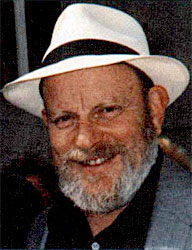
TRUE OR FALSE by Rabbi Baruch Cohon

Balaam’s story in Numbers 22-25 presents a classic example of a high placed, sought after, honored figure.  In this case he is a sorcerer hired by a king named Balak to curse Israel. His story brings us some pointed lessons.                            

Balak’s nation, Moab, fears the approaching Israelites.  Apparently Balak has more confidence in Balaam’s curse than he has in his army.  So come on, Balaam, put a hex on these invaders.   Then we can defeat them.  I’ll pay you well.

          Balaam claims to believe in G-d, and declines to go.  So Balak sends higher-ranked princes with bigger offers.  This time Balaam goes, but he warns Balak’s princes that he can only say the words G-d puts in his mouth.  Along the way, his female donkey that he is riding tries to discourage him, and gets beaten for her efforts, finally opening her mouth and talking to Balaam.   He is so angry by now that he tells this one-and-only talking animal that if he had a sword in his hand he would kill her.  The Hertz commentary quotes a Midrash on this episode:   At this, the ass laughed.  “He is intent on destroying a whole people by word of mouth and to kill one ass he needs a sword!”

Only then does he see the armed angel standing in his way, demanding to know why he is beating his animal.   Quoting this charge, our tradition stresses the warning against cruelty to animals called tzaar baaley khayim – the pain of living beings.   

          Despite all this, Balaam continues and meets Balak.  Try as they may, building altars, offering sacrifices, viewing the Israelite camp from different angles, Balaam cannot come up with a curse.  In fact, his message includes the words we repeat today when we enter a synagogue: Mah Tovu – “How goodly are thy tents, Jacob, thy dwellings Israel.”  He also predicts victory for Israel over all the tribes that block their way.

          So what does Balak do?  Arrest Balaam?  Have him killed?  Not hardly.  He still respects Balaam as a sorcerer, and agrees to send him home to his town by the Euphrates.  Before leaving, Balaam says “I will give you advice” – L’chah i-atz’cha. 

          At this point, Balaam would seem to be a great and valuable friend to Israel.  Right? 

          Hold on.  Chapter 31 puts a rather surprising closer on this story.  When Moses leads Israel in battle against the forces of Moab and Midian, the Israelites are reported to kill the male defenders including seven kings.  Their only victim who is named is none other than Balaam, “slain with the sword.”  Why?  Wasn’t Balaam the one who blessed Israel?

          The Torah records a reason.  In between the words he said in Chapter 24 and his execution, comes a narrative about how the Israelite men were camped in the plains of Moab and while there, they did this: “liznot el b’not Moav” – literally, they “whored around with the Moabite girls.”  This relationship involved them in the cult of Baal Peor, which apparently included some wild orgies.  Our rabbis learn that this came from the advice Balaam gave Balak.  Maybe he could not defeat the Israelites with his curse, but they could defeat themselves.   Sap their strength and destroy their faith.  And the Torah counts 24,000 dead in the resulting plague. 

          So much for Balaam’s friendship.   Like other false friends from then till now, in Midian or Washington, maybe Balaam gave us some fine words, but he did not mean them.  We need to be on our guard.
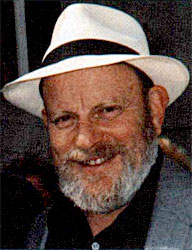
cohon_baruch.jpg

Rabbi Baruch Cohon


Posted in Balaam, Baruch Cohon, Book of Numbers, Israel, Jewish Blogs, Moses, Rabbi, Torah, Torah Study | Comments Off on TRUE OR FALSE by Rabbi Baruch Cohon

THE AGE OF MITZVAH by Rabbi Baruch Cohon

          During the summer, tradition assigns a chapter of Pirkey Avot, the Sayings of the Fathers, to each week.  This week features Chapter 5 of this most popular tractate.  One Mishna in this chapter seems particularly timely now, in view of recent published statements by both the author of the latest survey of the Jewish population, and the new president of the Union of Reform Judaism. 

          First, here is the Mishna: “At 5 years, learn Scripture; 10 for Mishna; 13 for Mitzvot (fulfilling the commandments, in other words Bar Mitzva); 15 for Talmud; 18 for marriage; 20 to earn a living; 30 for full strength; 40 for understanding; 50 to give counsel; 60 for old age; 70 for a hoary head; 80 for special strength; 90 to meditate; 100 as if dead; and any further just passing away from the world.”  For the first century or so of life, this is a remarkably positive outline, especially when compared to Shakespeare’s cynical list in Act II scene 7 of As You Like It.  Check that out, for kicks.

          Now how does this Mishna apply to the statements about today’s American Jewish community?  Quoted in the Forward newspaper, Steven Cohen, director of the Berman Jewish Policy Archive at New York University, says that increasing numbers of families have “weaker commitments to remain in Reform synagogues after they have bar-mitzvahed their youngest child.”  Rabbi Rick Jacobs, president of URJ, agrees, noting that “a staggering percentage of our b’nai mitzvah are eyeing the door by the time they reach Eyn Keloheynu.”  What applies to Reform Jews applies equally to Conservative and some Orthodox folks as well.

          Apparently the Mishnaic timetable for age 13 still holds.  What about the rest of the traditional “ages of man?”  Does the young Jew’s education still include just Scripture, Mishna and Talmud?  Does he still marry at 18?  And presumably live with his in-laws for 2 years before going out to earn a livelihood?  Does he refrain from giving advice until age 50?  And is he considered old at 60?

          Clearly, we consider most of the other ages differently now.  Why the fixation on 13 for Bar Mitzvah for boys, and on either 12 or 13 for a girl’s Bat Mitzvah, depending on the custom of your particular community?  True, there was a time when Reform congregations eliminated the Bar Mitzvah ceremony altogether, in favor of a class Confirmation program which most often took place at around age 16.  But more than half a century ago Reform leaders acquiesced to pressure from the people and reintroduced first Bar Mitzvah and later Bat Mitzvah.  Why do we love it so much?

          I recall doing something at age 12+ that I’m sure many other boys did as we prepared for this life-cycle event.  I asked my father what his Bar Mitzvah was like.  My father of blessed memory was a rabbi and a teacher of rabbis, so I expected to hear that his Bar Mitzvah was something great.  To my surprise, he answered that it didn’t amount to much. 

          “I was in the Yeshiva then,” he said.  “My family was in the village, 7 viorsts (Russian miles) away.  My father couldn’t even be there.  On a Thursday morning they called me to the Torah, I made my b’rocha, and that was it.” 

          That was it.  No Haftorah, no speech, no party, no presents.  Did that make my father a bad Jew?  Not a chance.  He was the best Jew I ever knew.  But certainly my Bar Mitzvah and those of my sons and grandsons, as well as the Bat Mitzvah celebrations of my daughters, were more fun.  Not only more fun, but more significant in our lives.  They dramatized our new sense of responsibility. 

          The American Bar Mitzvah keeps its hold on us for good reasons.  This is the only time in your young life to stand up before a whole community – not as a member of a class, not as a member of a team, but just as yourself – and show what you can do.  You won’t get another chance like this until your mid-twenties, if then.  It’s a great experience, and not only for the new young “adult.”  The community potentially gains a needed and valuable member, one whose own children will be able to have this same great experience. 

          What Jewish leaders strive to inject into this experience is the reason and the desire to go further, to take those new responsibilities and use them to activate a mature and intelligent Jewish life.  That requires the family to remain in the community, because the family and the community need each other’s support in the ongoing effort to build the Jewish future.        

           Think about it.

cohon_baruch.jpg

Posted in Baruch Cohon, Jewish, Jewish Blogs, Jewish Traditions, Judaism, Mishnaic Timetable, Mitzvah, Pirkey Avot, Talmud, Torah, Torah Study, United States | Comments Off on THE AGE OF MITZVAH by Rabbi Baruch Cohon

DO WE REALLY NEED LEADERS? by Rabbi Baruch Cohon

          This week’s story of Korah, in Numbers 16-18, recounts a rebellion that caused a crisis.   Korah, a Levite who apparently was deeply jealous of the authority of his fellow Levites Moses and Aaron, leads this rebellion.  Joining him are Datan and Aviram of the tribe of Reuben – Reuben, Jacob’s firstborn who lost national leadership.  They attract a following of 250 prominent men described as “princes of the community, chosen councilors, famous men.”  In other words, more would-be leaders.  They challenge Moses.  Some 2 million other Israelites watch the contest.                              

           Our Torah portion describes a fiery test that puts a violent end to the rebellion.  Moses turns the challenge back at Korah, demanding that he and his 250 followers bring fire-pans to the Tent of Meeting, along with Moses and Aaron, to see whose offering will be accepted.  Moses also summons Datan and Aviram but they refuse to go, and defy Moses, accusing him of lying about the Land of Milk and Honey and bringing the people out of Egypt to “kill us in the desert.”  At this point G-d tells Moses to clear everyone away from the tents of Datan and Aviram and the other Korahites.  Abruptly, the earth “opens its mouth and swallows them and their houses…and all their property.” Immediately, fire explodes from Heaven and destroys all the rebels at the Tent of Meeting. 

          End of rebellion?  Not quite.

          The next morning, Moses and Aaron have to face a shocked and bitter public.  “You killed G-d’s people!”  Their public cannot accept the thought that Korah & Co. were not just rebelling against Moses but against G-d Himself.   As a result of their misplaced sympathies, we read that a plague breaks out.  Moses turns to Aaron: “Pray and offer incense,” he urges.  “The plague has started!”  Aaron does not hesitate.  He takes the fire-pan and runs out among the people.  “He atoned for the people; he stood between the dead and the living, and the plague stopped.” 

          14,000 people reportedly died in that plague, plus the 250 followers of Korah.  Potentially Aaron saved maybe 2 million more.  We don’t completely escape the damage we cause with our mistakes.  But one man’s courage can make a huge difference.   Who among us, who among our noisy leaders, can stand “between the dead and the living”, or between the negative and the positive, to halt the plague of despair? 

          Aaron does not emerge anywhere near as noble or as inspired or as unique as his brother.  But he used his courage and his ingenuity to save his people, more than once.  Couldn’t we use a man like him today?

Posted in Aaron, Baruch Cohon, Israel, Jewish, Jewish Blogs, Korah, Moses, Rabbi, Torah, Torah Study | Comments Off on DO WE REALLY NEED LEADERS? by Rabbi Baruch Cohon

WHO’S A SPY?

This week we will read a particularly dramatic portion in the Torah, the story of the spies Moses sent across the Jordan to reconnoiter the Promised Land.  Twelve of them – all princes.  Twelve tribes, twelve spies.  Each one a prominent man from a leading family. 

          A whole month they roamed through Canaan, even bringing back samples of the land’s produce.  Emblematic of the agricultural prosperity they found was the giant grape cluster, so big it had to be carried by two men on a pole.  How the people’s mouths watered to see such plenty, after two years in the desert.  Here truly was the fertile crescent of the Middle East.

          But the spy-princes also brought a report that struck dismay into their people’s hearts.  They spoke of walled cities, of warlike tribesmen, of forbidding fortresses.  Such a country would be too strong to conquer, they said.  That was the majority opinion of the spies, ten out of twelve. 

          A minority opinion differed.  Two spies, Caleb and Joshua, said in effect “With G-d’s help we can do it.  We can take this country.”  They got drowned out.  As if to underscore the crisis, a group of Israelites tried to mount an attack, and were defeated.  Result?  38 more years in the desert.

          But that’s not the end of the story.  Yes, the people’s lack of faith condemned them to wander until the slave generation died off.  But the Haftorah, the companion reading from the Book of Joshua, tells a different story.  Of all the original 12 spies, just two were still alive – the hopeful minority, Caleb and Joshua.  Joshua was now the leader of the people, having succeeded Moses.  And Caleb was growing old.  But when Joshua sent just two spies to reconnoiter Jericho, according to the commentaries one of them was Caleb, no longer a ruling prince, and his partner was only 18 years old.  The two of them do all their spying in the house of a woman named Rahab.  Maybe her house was an inn, and maybe she offered a different kind of hospitality, depending on how we translate the word zonah which is how the text identifies her.  But she provides the two spies with just the information they need.  She also hides them from the Security Officers of Jericho, and lets them down from her window in the city wall, on a scarlet cord.  In return they promise that if she just hangs that scarlet cord in her window they will make sure no harm comes to her or her family when the Israelites invade.

          Of course the final result of this second spy story is Joshua’s triumph, when the shofar is blown and the walls of Jericho come tumbling down. 

          Re-reading these stories this year, I recall once discussing a movie treatment I wrote called “The Scarlet Cord” with producer Marvin Mirisch.  He and his brothers made some good pictures, but unfortunately they decided not to make that one.  So this year, once again, we can all read the story – and maybe imagine their contemplated cast, Yul Brynner as Joshua and Gina Lollobrigida as Rahab!

          Good shabos!

Posted in Baruch Cohon, Caleb, Israel, Jericho, Jewish, Jewish Blogs, Joshua, Moses, Rahab, Torah, Torah Study | Comments Off on WHO’S A SPY?

ARE YOU A LEVI?

          If your paternal DNA shows that you are descended from the tribe of Levi, you have certain privileges and duties that other Jewish people do not have.  For one, whether you are male or female, your first-born son does not need to be redeemed.  The redemption ceremony, called Pidyon ha-ben in Hebrew, consists of the baby’s father handing a cohen a symbolic amount – traditionally five coins – to confirm his son’s status as a member of his family and not a priest.  The pidyon ha-ben takes place on the 30th day of the baby’s life and offers the family an opportunity for a happy celebration.

          Naturally, that means the family first has to find a cohen – a descendant of Aaron the ancient High Priest — who can conduct the ceremony.  Being a cohen myself, I remember one pidyon ha-ben I had scheduled for a young local couple.  Arriving at their apartment, I found the place full of relatives and friends laughing and enjoying each other’s company.  With the young parents and one grandfather, I sat down to make out the certificate.  When we came to the mother’s Hebrew name and her father’s Hebrew name, he added the word ha-Levi.  Woops!  Surprise.  I had to tell them we couldn’t do the ceremony because their son did not need to be redeemed.  His mother being the daughter of a levi, he was exempt.

          “What will we do?” the mother asked.

          I looked around at the guests and said, “Have a party.  Welcome your son!”  They did.

          The Biblical background for this whole scenario comes from the 8th chapter of the Book of Numbers – this week’s Torah reading.  And it draws on the account in Exodus, the story of the Golden Calf.  In the turmoil that followed Moses’ shock when he came down the mountain with the Tablets of the Law and found his people dancing around a calf-shaped idol, it was the tribe of Levi that came to his aid.  Therefore, Levi becomes G-d’s chosen elite, a Divinely ordained “first-born,” to replace the firstborn of all the Israelites that got spared in the extinction of the Tenth Plague in Egypt.  As we read here, Moses gets the Divine message: “The Levites shall be Mine.”  They are numbered separately, they have special locations in the desert camp, and each of their families has definite religious duties including transporting the Ark and the Tabernacle.  In later centuries, when the Holy Temple stood in Jerusalem, it was the Levites who formed the sacred choir and orchestra that stood on the steps of the sanctuary and sang the psalms.

In modern times too, descendants of the tribe of Levi have specific roles.  To some people, it may look as if the levi plays second fiddle, since he never gets the first aliya – the first call to the Torah reading, always the second, following the cohen.  Even when there is no cohen at services, the levi doesn’t go first.  But it is the levi who washes the cohen’s hands to prepare him for reciting the Priestly Blessing.  And this is significant.  After all, Aaron, like his brother Moses and sister Miriam, came from a Levitic family.  So his descendants constitute an offshoot of the tribe of Levi.  Not a separate tribe.   Also, remember that when the people were ready to give up on Moses ever coming down from Mount Sinai who was it they pressured for help?  Aaron.  And what did Aaron do?  He made them a golden calf.  So he was involved in their sin.  The rest of the Levites were involved in their punishment.  Despite his grave error, Aaron retained his priesthood because, as the Mishna reminds us, he was a rodef shalom – a pursuer of peace; he healed wounds between people.  The Levites gained their status, replacing the firstborn of every family, by their courage and loyalty in crisis.

          So, if you are a Levi, you have a history to be proud of. 

##

Posted in Baruch Cohon, Cohon, Jewish, Jewish Blogs, Jewish Traditions, Legacy, Levi, Moses, Torah | Comments Off on ARE YOU A LEVI?