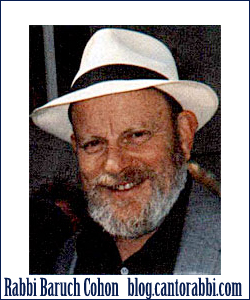
WHY DO YOU CRY TO ME? BETTER SING! by Rabbi Baruch Cohon
The 13th thru 17th chapters of Exodus tell some of the Bibles most dramatic and significant episodes. After unsuccessfully negotiating with Moses, Pharaoh and his people experienced the last three plagues, starting with Locusts, #8, then Darkness, #9, and finally #10, the most fearsome of all, Death of the Firstborn. Again Pharaoh tries negotiating after 8 and 9, but fails. When his own firstborn, the heir to the throne, is found dead as well as every firstborn of humans and cattle in Egypt he officially ejects the entire Hebrew nation, adults, children, livestock and all. Off they go.
But before they can reach the Red Sea, Pharaoh has another change of heart. What was he thinking? How could he send away all those slaves? So he mobilizes 600 shock troops chariots and horsemen and gives chase. Seeing the cloud of dust raised by the pursuing army, the Israelites turn on Moses: Were there no graves in Egypt? Did you have to bring us here to die in the desert? Moses assures them that G-d will fight for them, and they are to be silent. And indeed the Divine pillar of cloud moves from in front of the Israelites to behind them and hovers between them and the Egyptian army.
Now they arrive at the sea shore. What can they do? Like his people, Moses sees a grim alternative: get slaughtered by the enemy or drown in the sea. But he hears G-ds voice: Why do you cry to Me? Tell the Israelites to go forward! Here a famous midrash supplies the details. Nothing happened until one man, Nachshon by name, steps into the water. He goes forward until the water reaches his neck, and then the great miracle! A powerful wind raises the water to a wall on his right and on his left, and the Israelites cross on dry land. In his honor, the name Nachshon survives in modern Israel as the example of courageous action.
The pursuing Egyptian chariots lose their wheels in the deep wet sand, and their riders die in the sea. Those lost wheels of the royal chariots were overlaid in gold. Just recently archeologists found the gold wheel-covers at the bottom of the Red Sea. The wooden wheels and the chariots themselves were long since decomposed, but the metal survived! Yes, it really happened.
None of these episodes, spectacular as they are, give their name to this reading, however. This Sabbath in synagogues throughout the world is not called the Sabbath of escape, or the Sabbath of freedom or the Sabbath of broken wheels. It is called Shabat Shira the Sabbath of Song. Arriving on the far side of the Red Sea and seeing their enemies sink behind them, Moses and his people sang an epic song of praise and triumph. This Song of the Sea is still chanted with its special melody in Sabbath morning services. And this Sabbath provides an occasion to perform Jewish music old and new for many audiences.
Personally I am grateful to report that a special program of my own music will be performed at Temple Emanu-El of Tucson this week. And I hope my readers will take this occasion to visit the Florida Atlantic University website, www.fau.edu which provides a huge selection of recorded Jewish music of all kinds for your listening pleasure. I am happy to be included in their library.
http://www.library.fau.edu/depts/spc/spc/soundarchives.htm
For singers, instrumentalists and listeners have a Good Shabat Shira!