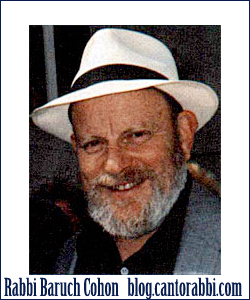
THE POWER OF CONNECTION by Rabbi Baruch Cohon

     Last week, in Genesis 42, Joseph’s epic has him taking advantage of his brothers by accusing them of spying.  Then he demands that they bring their youngest brother Benjamin when they come back to buy more food.  He even takes one of them hostage, Simeon, to make sure they will do that.    Now they remember their real offense – when they ignored their brother Joseph’s pleas and sold him into slavery – and they talk to each other about it.  “That’s why this trouble came upon us,” they say.  All this in Joseph’s presence, but unaware that he understands every word.      Kee ha-meylitz bey-no-som – “for the interpreter stood between them.”  Joseph spoke to them only in the Egyptian language, which the interpreter translated to Hebrew.  Of course Joseph needed no translation.  So he leaves the room, goes into his private quarters and weeps, then returns to continue playing his role of authority.  In this way he engineers the opportunity to see his only full brother again, young Benjamin.         

          When they do convince their father Jacob to release Benjamin for the next trip to Egypt, Joseph carries his cat-and-mouse game to another level.  He has his private goblet placed in Benjamin’s traveling bag, and sends his servants after it.  All 11 brothers are brought back to the palace.  Now he demands that they leave Benjamin with Joseph as his slave in punishment for this alleged theft.  

          This week Chapter 44 and 45 relate the response Joseph gets to his game.  Judah, who is emerging as the natural leader of the family – even though he is not the first-born – approaches this Viceroy of Egypt and spells out his family’s case.  He is eloquent in describing Jacob’s attachment to Rachel’s sons – one who is presumed dead and this his youngest – and predicts the old man’s death of grief if Benjamin does not return.

          For Joseph, this is more than he can bear.  He cries out “All my men, leave my presence!” And obediently, they all exit – the attendants, the minor dignitaries, and the interpreters.   Now he faces his brothers and speaks to them in Hebrew: Anee Yosef, he says: “I am Joseph.  Is my father still alive?”  Predictably, we learn that the brothers are nonplussed.  They cannot even answer him, even though they are now speaking the same language.  So he asks them to come close to him, as he makes his true identity known to them.

          Why come close?  Didn’t he prove himself by speaking Hebrew?  Our commentators tell us that was not really enough.  The Or haHayyim says he needed them close enough to whisper to them, aware that his Egyptian advisors would be listening through the keyholes.   Certainly Joseph has a lot to tell his brothers, about how he is dealing with the famine, about the Land of Goshen where he plans to settle them, maybe even about why he had to shave off his beard.  “Don’t think it was you who sent me here,” he says.  “G-d sent me to prepare a refuge for our family.” 

          That is one explanation.  The Kli Yokor commentary has a different one:  he had them come close so he could show them he was circumcised.  Proof positive that he was one of them. 

           Sometimes we need to stop taking advantage and prove our connection to each other.  More often we need to stop pretending and connect with our own identity.  
cohon_baruch14.jpg

Posted in Baruch Cohon, Book of Genesis, Jewish Blogs, Joseph, Torah Study | 1 Comment

LIGHTS AND DEDICATION a Hanukkah message from Rabbi Baruch Cohon

          Hanukkah is nicknamed “Feast of Lights” in English, although the Hebrew word means “Dedication.”  Celebrating the experience of the Maccabees who rededicated the Jerusalem Sanctuary after expelling the Greek enemies, Hanukkah’s 8 days commemorate the one little bottle of oil that they found to fuel the Eternal Light – the only one that still bore the unbroken seal of the High Priest.   As the familiar Talmudic narrative goes, the bottle contained only enough oil to burn for one day, but miraculously it lasted 8 days.  That certainly qualifies as a dedication worth celebrating.

          This year I am grateful to observe two dedications, commemorating people who were significant in my life and in many other lives as well.  And Hanukkah is a perfect time to do this.

          On the eve of the 4th day we dedicated a Ner Tamid – an Eternal Light – not in Solomon’s Temple but in a fine heymish neighborhood Shul called Bais Bezalel where I usually spend Shabat mornings.  Led by its Rabbi Binyomin Lisbon whom I am proud to call my friend, we honored my teacher of blessed memory, Abraham Zevi Idelsohn.   Cantor, composer, researcher and teacher, he pioneered the entire field of Jewish Musicology, gathering the vocal traditions of global Jewry and making them available to the world of music.  (More about him and his career in a column on my website, http://cantorabbi.com )  Today, an organization called the Idelsohn Society concentrates on Jewish vinyl records.   And a new film celebrates a song he introduced to the world – now easily the best-known Jewish song ever – Hava Nagilah.  Like the Ner Tamid, Idelsohn’s light still shines.

          The next day we dedicated a Mezuzah on a doorpost of Chabad House of Los Angeles, in memory of a dear friend and colleague of mine, Rabbi/Cantor David Kane.  His talent and his guidance as a clergyman and leader of prayer influenced many Jews in Southern California.  Before coming here, however, David’s life was very different.  From Bendzin, Poland, he was taken to a concentration camp as a young boy.   There he survived by joining other Jewish boys in singing for the camp commandant.  There he found himself when the camp was liberated, guiding the conquering American general through the hideous surroundings he and others endured.  That general’s name was Dwight D. Eisenhower.    Observing the 65th anniversary of that liberation, the German government invited David and his wife Yetta to take part in the ceremony.  Both being survivors, they spent his last years speaking about the Holocaust in schools, and wrote a book about their experiences.  Yetta continues that activity, honoring David’s life.  Just imagine a man with this kind of history, loving and performing music, enjoying a model marriage and a devoted family, and taking great joy in making people laugh.  That was my friend David Kane.  We shared singing in cantorial ensembles, we studied with the same scholar who ordained us both, and we took delight in each other’s nakhes.  His name will honor this Chabad House doorway.   Joining me in honoring his memory this Hanukkah were my wife Claire, Yetta Kane and son Jerry Kane, Rev. and Mrs. Schmidt from Germany who met the Kanes at that 65th anniversary of liberation, and representing Chabad was Rabbi Boruch Shlomo Cunin, the brilliant and irrepressible leader of the Lubavitch movement in the West.

          Of course it is no coincidence that both of these dedications take place on the 4th Hanukkah day.  That day is the birthday of my youngest grandchild, Cipora Angie Cohon.  So in her honor also, we dedicate this holiday to good memories, good plans, good Jews.

          Happy Hanukkah!   

 cohon_baruch12.jpg

Posted in Abraham Zevi idelsohn, Baruch Cohon, Hanukkah, Jewish, Jewish Blogs, Jewish Festivals, Jewish Traditions, Judaism, Maccabees, Memory, Rabbi Cantor David Kane, Talmud | Comments Off on LIGHTS AND DEDICATION a Hanukkah message from Rabbi Baruch Cohon

DREAMS OF GLORY by Rabbi Baruch Cohon

Of all the dreamers in human history, Joseph stands out.  We meet him in this week’s Sedrah Vayeyshev, at age 17, telling his father and his older brothers about his dreams.   One is a dream of physical glory, in which he sees his sheaf of grain stand up in the field while all their sheaves surround his and bow.   The second dream is highly symbolic, with the sun and moon and 11 stars bowing down to him.  Already unpopular with his brothers, since he was Jacob’s favorite son, these dreams earn him their mortal hatred.  They refer to him as baal hakhalomos – “the dream-master.”  They consider murdering him, and decide instead to sell him into servitude.  His dreams of glory begin to turn into nightmares.

Yet, 20 years later those dreams come true.

What happens in between makes the story of Joseph not only a great classic biography, which inspired writers like Thomas Mann to retell it, but a unique lesson in how to make our dreams come true.  Joseph’s character develops under all different kinds of pressure.

First come the Ishmaelites on the caravan, who buy him from his brothers for 20 silver coins.  All of a sudden this spoiled kid becomes a slave.  He is human merchandise that they will sell in Egypt for whatever they can get, and until they arrive there he will earn his meager meal by helping tend the camels.   A boy who seldom even got a direct order from his indulgent father, now gets plenty of orders – and kicks and slaps — from Arab camel-drivers.  He learns to take it.  He has no choice.

Then comes Potiphar, the Egyptian aristocrat, captain of the guard.  He puts Joseph to work in his house.  By now Joseph knows enough about taking orders to anticipate what needs to be done, and with native intelligence and youthful energy he does it efficiently.  So Potiphar makes him major domo.  Bright and good-looking, he is soon running the whole estate.

Then comes Potiphar’s wife.  She takes a look at this young man and decides she wants him.   Her proposition is anything but subtle.  “Lie with me!”  Young as he is, Joseph senses the risks.  And his home training warns him that this is wrong in the sight of G-d.  So he turns her down.   What might be going through the mind of this 18-year-old slave, we don’t know.  Is he a virgin?  Is the lady attractive?  Could he really desire her?  The Torah narrative ignores those questions.  But the cantillation for the word va-y’ma-eyn (he refused) is a shalshelet, literally a “chain” – the rarest and most ornate of musical figures in Torah chant.  That refusal is very important.

Incidentally, Rashi quotes the Talmudic opinion that Potiphar himself had a homosexual desire for Joseph.  Which might explain his wife’s eagerness for something she was not getting from her husband.  The Torah identifies Potiphar as a saris, usually translated “officer” or “courtier” but literally meaning “eunuch,” as were many of ancient potentates’ courtiers, surgically emasculated to safeguard the king’s harem.  

Indeed Mrs. P keeps tempting Joseph day after day without success, until one day when the other servants are not in the house she grabs his cloak to pull him into bed.  He leaves the cloak in her hands and goes out.  Frustrated and angry, she uses the cloak as evidence to frame him for attempted rape.  So Joseph goes to prison.

Next come his jailer and his fellow prisoners.  He impresses the jailer enough to become his right-hand man.  And his fellow inmates come to him to interpret their dreams.  In the following Torah portion we will read how Joseph’s interpretations lead to Pharoah’s releasing him and making him viceroy.  Add some Divine inspiration, and Joseph is in position to receive his brothers and his father, and to save them from starvation.  

How did he get there?  It was no easy trip.  The Ishmaelite caravan taught him to work.  Servitude on Potiphar’s estate developed his ambition and enabled him to find ways to achieve it.  Never forgetting his father’s teaching, he is able to weather his sexual trials and to make the best of an unjust punishment.  By the time he meets Pharaoh at age 30, Joseph has all the qualifications to live out his boyhood dream.  Running the country for the next seven years and controlling its economy to survive poverty, he earns the right to have “the sun and moon and 11 stars bow to him.” No, it wasn’t easy.

Fulfilling our dreams never is.  Typically it involves hard work, strength to endure disappointments and rise above them, backbone to live by our principles, and enough imagination to preserve the vision we aim for.   Like Joseph, we might have to spend 20 years getting there.  Maybe less, like Mark Zuckerberg.  Or maybe more, like most of us.  But it is our challenge, a sacred journey that calls us to bring our vision to life.  

Brakha v’hatzlakha – Have a successful trip!

cohon_baruch1.jpg

Posted in baal hakhalomos, Baruch Cohon, Dreams, Jewish Blogs, Joseph, Potiphar, Talmud, Torah, Torah Study | Comments Off on DREAMS OF GLORY by Rabbi Baruch Cohon

ETERNAL WRESTLING MATCH by Rabbi Baruch Cohon


        This week’s Torah section, Vayishlakh, includes a famous struggle.  Genesis 32 recounts how Jacob, expecting to encounter his vengeful brother Esau, sets up a camp for his 4 wives and 11 children on the safe side of the river Jabbok while he himself camps on the other side.  That night, “a man (ish) wrestled with him until the dawn rose.”  Seeing that he could not beat Jacob, the stranger asks to be released before daylight.  Jacob refuses to release him until the stranger blesses him.  Then follows this conversation:

“What is your name?”

“Jacob.”

“No longer will your name be called Jacob, but Israel.  For you have striven with G-d and with men and you have prevailed.”

Etymologically, the name Israel and the word for striven, sarita, come from the same root.  The mysterious adversary, while he is called ish – a man – is understood to be an angel.  He is even identified as the angel of Esau.  He cannot stay and fight in daylight, and he will not give his name.  He brushes the question aside, saying:

“Why do you ask for my name?”  And he blesses Jacob there.

But during the fight he injures Jacob in the hollow of the thigh.  As a memorial of that fight, the Torah states, “the descendants of Israel do not eat the sinew of the thigh vein.”  So, long before receiving the Torah at Sinai, with its dietary laws, the custom started to abstain from eating the hind quarters of animals.  The same hind quarters that kosher butchers still sell off to non-Jewish meat markets.  

After the fight, the superhuman wrestler is gone.  Israel, the winner, is limping. 

This Sedrah also recounts Esau’s family history.  One of his wives is Ishmael’s daughter.  Another source of conflict.  So the wrestling goes on.  Jacob fought Esau in the womb.  Israel fights Esau’s champion in the dark.  Their descendants struggle against each other in the United Nations. 

Ever since Jacob fought his way to becoming Israel, the wrestling match continues.  Sometimes in one place, sometimes in another, we struggle with enemies who seem too strong to be human.  Defeating them makes us Israel.  We might limp for a while, but we survive.  

If Israel/Jacob/Jeshurun could prevail against a superhuman adversary, the Jewish people and the Jewish state today can face whatever human enemies may threaten.  Never mind the limp.  Go for victory.

cohon_baruch16.jpg

Posted in Baruch Cohon, Book of Genesis, Eternal Wrestling Match, Israel, Jacob, Jewish Blogs, Torah, Torah Study | Comments Off on ETERNAL WRESTLING MATCH by Rabbi Baruch Cohon

WHO IS A ZIONIST? By Rabbi Baruch Cohon

          An old comic definition of a Zionist went like this: “A Zionist is a Jew who collects money from another Jew so that a third Jew can move to Jerusalem.”  No politics, just charity.

          When my oldest daughter went on an Ulpan program to Israel at the age of 15, David Ben Gurion was still living on his farm in Sde Boker.  The Ulpan leaders arranged to take their group to meet him.   He expressed his strong interest in the young people and urged them to come and live inEretz Yisrael.  When one of them remarked about his Zionism, Ben Gurion answered “I am not a Zionist.”  The kids were amazed.  How could David Ben Gurion not be a Zionist?  He explained: “I’m not a Zionist.  I live here.  Your parents can be Zionists and stay in America with their swimming pools.  We need you here with us.”  Again no politics, just reality.

          This week in the Book of Genesis we will read another Divine promise to one of our patriarchs that the land of Canaan would belong to his descendants.  Three times that message appears.  Our Torah recounts that promise to Abraham, to Isaac, and now to Jacob.  Alone and rather desperate, Jacob left Beer Sheba to escape his brother Esau’s violence, and now he is encamped on the way to Haran, sleeping on the ground with a stone for a pillow.  But here he dreams of a ladder with its feet on earth and its top reaching heaven.  Angels climb and descend the ladder.   And from up above he hears the voice of G-d telling him that the ground he is lying on will be given to him and to his children.   No negotiations, no politics, just destiny.

          One rabbinic commentary on Jacob’s dream asks why the angels first climb the ladder and then descend.  Angels make their home in heaven, don’t they?  Would they not more likely walkdown the ladder first and then climb up?  This indicates, says the commentator, that Eretz Yisraelhas its own native angels who live there and accompany travelers to the country.

          Waking from his dream, Jacob is thrilled.  “Surely G-d is in this place and I did not know it.” No politics, just inspiration.

          Personally, I did not grow up in a Zionist family.  But when I first visited Jerusalem I could feel what Jacob felt.  In a unique way it is the center of the universe.     

          After all the centuries, all the successes and all the invasions, all the victories and all the defeats, it remained for Theodore Herzl to make Zionism a political movement.  By history’s definition, it is one of the very few such movements that succeeded.  Like Ben Gurion, those who inherit that success are not Zionists any more, they are Israelis. 

          Now it is Israel’s enemies who often use the name of Zionism as a political target of their hatred.  They call the Jewish state “the Zionist entity.”   And their UN dupes brand Zionism as racism, charge Zionism with violating human rights, etc. etc.  To the politically correct, Zionism is the worst of bad words.  Such a policy is not just mistaken, it is absurd.

          By political definitions, Zionism is history.  If you or I support Israel today, if you or I would urge the United States and other free countries to back Israel’s right to self-defense and to oppose the Jihad effort to destroy her, does that make us Zionists?  For Ben Gurion, maybe yes.  For Herzl, No.  Our concern for Israel does not make us citizens of Israel.  Remaining citizens of wherever we live, we face two issues in the world around us:

         We believe people deserve a chance to build a peaceful productive future, free of terrorist attacks.  This is vital in the Middle East or South America or East Asia — or Antarctica.  

          We care about the lives of 7 million of our Jewish brothers and sisters. 

 Who is a Zionist?  Not me.  How about you?

cohon_baruch15.jpg

Posted in Abraham, Baruch Cohon, Ben Gurion, Book of Genesis, Eretz Yisrael, Isaac, Israel, Jacob, Jacob's Ladder, Jerusalem, Jewish, Jewish Blogs, Jewish Traditions, Judaism, Theodore Herzl, Torah, Torah Study, war, Zionism, Zionist | Comments Off on WHO IS A ZIONIST? By Rabbi Baruch Cohon