HIDDEN THINGS – Nitzavim-Vayeylekh – by Rabbi Baruch Cohon

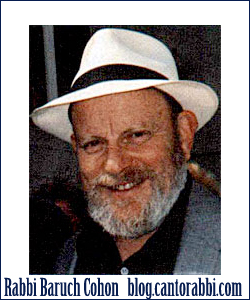
Rabbi Baruch Cohon

Rabbi Baruch Cohon

HIDDEN THINGS – Nitzavim-Vayeylekh – Deut. 29:9-31:30 – by Rabbi Baruch Cohon

          This week we read a double portion with countless quotable lines.  Just arbitrarily, let’s pick one. “The hidden things belong to G-d, and the revealed things are for us and our children forever to carry out all the words of this Law.”

          What is hidden?  What is revealed?  Certainly the Torah lays out its rules completely.  No secret mysteries here, as in some other doctrines.  So the guidelines of our lives are revealed, and our duty is to carry them out.  Then what is hidden?

          Human minds in their limitation cannot know or understand everything.  Our most brilliant scientists are still discovering phenomena.  World renowned archeologists still search for more data about the past.  And without doubt historians cannot be experts in science – or vice versa.  Plenty of hidden things there, but no personal responsibility.  Since G-d knows everything, we leave it at that.

          Our commentators take a very different view.  They tell us that this sentence refers specifically to sins.  Yes, there are hidden offenses.  An individual can commit an evil act in secret and “get away with it.”  Murder, theft, arson, rape – any number of crimes go unpunished.  Nobody knows who did it.  No human being, that is.  But G-d knows.  “The hidden things belong to G-d.”  So the perpetrator can expect justice hereafter.  On the other hand public violations are a matter of record.  If an entire family engages in wrongdoing, they cannot keep it secret and frequently don’t even try.  Could be smuggling, extortion, prostitution, the drug trade or the numbers game – it is known.  How much more public is the evil practiced by a business, a union or an entire national administration.  All the people, all citizens, then bear responsibility to expose the culprits and expel them, says the Kli Yokor commentary, because “the revealed things belong to us and our children forever, to carry out the words of this Law.”

                This year, these teachings inevitably raise a question: if the hidden things are secretly intercepted messages in NSA files, and whistleblowers reveal them, who should be expelled from the country?

 You can contact Rabbi Baruch Cohon for further discussion and/or comments at: baruch.c.2011@gmail.com


Posted in Baruch Cohon, Book of Deuteronomy, Jewish Blogs, Torah Study | Tagged , , , , , | 1 Comment

98 WORDS TO THE WISE – Kee tavo, Deut.26-29:8 – by Rabbi Baruch Cohon

Rabbi Baruch Cohon

Rabbi Baruch Cohon

98 WORDS TO THE WISE – Kee tavo, Deut.26-29:8 – by Rabbi Baruch Cohon

          This week’s Torah reading includes Moses’ Third Discourse, and the famous lists of blessings and curses – blessings earned by carrying out the Divine commandments, and curses incurred by violating them.  When reading this section in traditional Sabbath services, either the rabbi or the Torah reader himself is called to recite the blessings before and after the section is read.  

The reader starts chanting the words in full voice, detailing the blessings we can expect from right conduct.  For example, “G-d will make you the head and not the tail.  You will always be above and never below, when you listen to G-d’s commandments that I give you today.” 

And then the reader drops his pitch and his volume, and launches into a list of warnings – disasters we can bring on ourselves.  A hush falls on the congregation.  Quiet though the reader’s voice may be, the tokhakha – the Warning – rings out.  “You will be cursed in the city and cursed in the field… cursed in the fruit of your body and in the fruit of your land… G-d will cause you to be struck by your enemies.   You will go out against them on one road, and flee from them by seven roads.   You will become a horror to all the kingdoms of the earth…  You will betroth a woman and another man will lie with her, you will build a house and you will not dwell there, plant a vineyard and not use its fruit… Your sons and daughters will be given to another people and your eyes will see, and you will ache from losing them but will have no power in your hand… You will become insane from what your eyes will see.”  And on and on.  Diseases brought on by perversion; defeat resulting from false pride.  The last verses sum up the feeling of the sufferer: “You will not believe in your life.  In the morning you will say ‘if night will only come’ and in the evening you will say ‘when will it be morning?’…  G-d will return you to Egypt in ships and you will offer yourselves for sale as servants and maids and no one will buy.”

As many commentators observed, the only worse predictions possible would be to describe what really happened in Jewish history.

This is not the only list of warnings in the Torah.  The first one comes in the reading calledBehukotai at the end of the Book of Leviticus, in preparation for receiving the Law on Mount Sinai. Also quite dramatic, it is expressed differently.  The Lubavitcher Rebbe points out that here in Deuteronomy we have twice as many warnings as in Leviticus.  There we had 49.   Here are 98.  Why is this text double length?   His answer is fascinating.  He says since Behukotai is read before the holiday of Shavuot (Feast of Weeks, or Pentecost) it commemorates receiving the Torah, when the Jewish People were on the level of tzadikim, the righteous.  Here in Kee Tavo we are preparing for the High Holidays when the goal is teshuvah, repentance or return.  The Talmud teaches that the true returnee, the baal teshuvah, occupies a moral position higher even than the most complete tzadik.  Therefore when preparing for that kind of return, we need more warnings.  

As if welcoming all of us potential returnees, this week’s Haftorah from chapter 60 of the prophet Isaiah starts with the great words: “Kumi ori – Rise and shine, for your light has arrived, and G-d’s glory shines on you!”  So may it be this year.

You can contact Rabbi Baruch Cohon for further discussion and/or comments at: baruch.c.2011@gmail.com

Posted in Baruch Cohon, Book of Deuteronomy, Jewish, Jewish Blogs, Torah, Torah Study | Tagged , , , , , , , , , | Comments Off on 98 WORDS TO THE WISE – Kee tavo, Deut.26-29:8 – by Rabbi Baruch Cohon

GOING TO WAR by Rabbi Baruch Cohon

Rabbi Baruch Cohon

Rabbi Baruch Cohon

GOING TO WAR                  by Rabbi Baruch Cohon

          Two sections in the Book of Deuteronomy begin with the words Kee teytzey lamilkhama – “When you go out to war.” 

The first section, Chapter 20, details rules to be followed in warfare.  Judaism never said that all was fair in love and war.  Far from it.  Just as Jewish tradition sets out rules and principles for interaction between the sexes, it sets very strict standards for how to conduct military operations.  Those standards start with a special role for the cohen, the priest attached to the army unit.  Much more than a chaplain, he is known in the Talmud as mashuakh milkhama – “anointed for battle.”  And he is the one who urges the troops to courage, to have confidence that G-d is on their side.  At his instruction the officers call out all those who qualify for deferments: one who built a house and did not yet move in, one who  planted a vineyard and did not use its fruit, one who betrothed a woman and did not  yet marry her.  And one more: one who is “fearful and faint-hearted,” lest he infect his comrades with his fear.  Some interpret this as referring to one who is afraid of the sins he might commit in warfare.  Read “conscientious objector?” 

Then we read about how to treat an enemy city.   Offer terms for peace first.  If they accept, take them all prisoner and put them to work.  If they refuse, attack!  Destroy the male population and take the women and children along with the livestock.  More about this later.

Even trees rate special treatment.  At a time when trees around an enemy city were routinely used for battering rams, the Torah requires that the army look at the tree first.  Is it a fruit tree?  Leave it alone.  Do not raise an axe against it, “for is the tree of the field a man that it should join you in a siege?”  Only if it is not a fruit tree may it be used in battle.

The second Kee teytzey section starts at Chapter 21 verse 10, and opens this week’s Torah reading. Unlike the first section, it is not about military rules at all.  It concerns women’s rights.  Those rights apply in a unique way to a female prisoner of war.  “If you see among the captives a beautiful woman, and you desire her,” says the Torah, “you can take her for a wife.”  Bearing in mind, of course, that polygamy was the custom, the Jewish soldier still had certain specifics to observe in this case: “Bring her home; she must shave her head and pare her nails, take off the clothes of her captivity, sit in your house and weep for her father and mother for a month.”  What a remarkable law. First you have to house her.  Then she has to make herself as unattractive as possible by losing that long hair and those beautiful clothes.  And you have to stay away from her for a month while she is in mourning.  “After that you may have intercourse with her and be her husband and she shall be your wife.”  Right.  Make her as unattractive as possible – bald, dressed plain, with tear-stained eyes – and then you can first take possession?  No wonder the Torah continues: “It shall be, if you do not want her, send her away wherever she will go.   You may not sell her as a slave, because you have humbled her.”  This was Jewish law 3,000 years ago.   Tell it to most armies today.

What is particularly interesting about both of these sections is the opening phrase: Kee teytzey lamilkhama – When you go out to war.  Not if, but when.  Note that the Torah does not say go to war, or don’t go to war.  It does not say all war is good or all war is evil.  War happens.  That, the Torah takes for granted.  What it teaches is standards of conduct that apply even in war.  In fact, Jewish law provides for three different kinds of warfare: #1 was Khova – the obligatory war, which happened only once, and was Joshua’s war to conquer the Land of Israel; #2 was Mitzva – defending Israel from attack, which included operations like reclaiming captured Israelites as well as peremptory strikes; and #3 was calledR’shut – optional, as in the case of the wars of David and Solomon to expand Israel’s borders.  The rabbis of the Talmud insisted that the deferments mentioned in the Torah applied only in optional wars. When the nation is threatened, universal service is required.  Even, as the Talmud says, “the bridegroom from his chamber and the bride from her wedding canopy.”

Defining the need and purpose of warfare becomes more urgent as human beings reach higher on our scale of values.  Although our enemies try to take advantage of that reach, Torah standards can provide a clear avenue to wisdom on the subject.

You can contact Rabbi Baruch Cohon for further discussion and/or comments at: baruch.c.2011@gmail.com

Posted in Baruch Cohon, Book of Deuteronomy, Jewish, Jewish Blogs, Torah, Torah Study | Tagged , , , , , , | Comments Off on GOING TO WAR by Rabbi Baruch Cohon

PURGING EVIL – Shoftim – Deut.16:18-21:9 – by Rabbi Baruch Cohon

Rabbi Baruch Cohon

Rabbi Baruch Cohon

PURGING EVIL – Shoftim – Deut.16:18-21:9 – by Rabbi Baruch Cohon    

          Justice is Moses’ theme in this section, setting out rules and methods to achieve that goal.  Courts, magistrates, officers – all the nation’s public administrators have a basic duty to see that justice is done. He starts out by cautioning those in authority to avoid showing favoritism, and never to accept bribes, “for a bribe can blind the eyes of the wise, and pervert the words of the righteous.  Justice, justice shall you pursue.”  Classic words.

          But the charge that becomes a refrain in this section is even more telling.  It says simply: uvee-arta ha-Ra mikir-Beh-kha – “Purge the evil from your midst.”  Evil is there.  We must get rid of it.  And sometimes that requires violent action.  The first word of this refrain, uvee-arta, appears in other connections and usually involves destruction by fire, as in bee-ur khametz, the destruction of leaven before Passover, or in the case of mav’eer, someone who started a fire that destroyed his neighbor’s field. 

          Here we find several instances of capital punishment for the purpose of destroying evil.  A most dramatic example of Mosaic justice comes at the end of Chapter 19, and concerns a false witness.  Let’s call him Aleph.  He “blows the whistle” on someone called Bet.  Now the Torah does not specify what Aleph testifies that Bet did.  It could be murder, idolatry, perversion, or adultery – all of which called for capital punishment.  Or it could be something as contemptible as moving a fence to steal some land. Aleph is the only witness, and we read in no uncertain terms that verdicts require at least two witnesses. But the accusation is there.  So both Aleph and Bet must appear in court.  The judges and officers must then investigate thoroughly, and find out the real facts.  If those facts show that Aleph accused Bet falsely, then the result will be: “You shall do to him as he plotted to do to his brother.  Thus shall you purge the evil from your midst.” 

          Poetic justice, indeed. 

Reading these 3,000-year-old rulings, we can well reflect on how knowledge of Torah law prevented corruption in ancient Israel.   Certainly we find no descriptions here of changing those laws to conform with “social progress.”  No such thing as accepting same-sex unions and calling them marriages on the basis of civil rights.  Even the non-religious government of Russia reportedly just passed a law effectively reiterating Leviticus on the subject of homosexual relations: “Do not lie with a man as you lie with a woman.  It is an abomination.”       

What we do find is presumption of innocence.  You were innocent until proven guilty, in Moses’ court just as in America.  There were some differences.  This section continues the provision of Cities of Refuge, protecting someone who killed by accident from the legally approved vengeance of the victim’s next of kin.   In addition, two or three eye witnesses were required to convict a suspect.  And circumstantial evidence was not admissible, unlike U.S. courts where murder verdicts frequently depend entirely on circumstantial evidence.   So far as we know, however, Mosaic justice applied equally to the native and the foreigner, to the rich and the poor, to men and to women.  Justice, justice shall you pursue.  Why is the word repeated?   Because, say the commentators, we must employ fair and just methods to carry out the law.  Only thus can we purge the evil from our midst.

You can contact Rabbi Baruch Cohon for further discussion and/or comments at: baruch.c.2011@gmail.com

Posted in Baruch Cohon, Book of Deuteronomy, Jewish, Jewish Blogs, Jewish Law, Moses, Torah, Torah Study | Tagged , , , , , , | Comments Off on PURGING EVIL – Shoftim – Deut.16:18-21:9 – by Rabbi Baruch Cohon

HOLY ARITHMETIC – Re’eh by Rabbi Baruch Cohon

Rabbi Baruch Cohon

Rabbi Baruch Cohon

HOLY ARITHMETIC – Re’eh, Deut.13:1 – by Rabbi Baruch Cohon

          In this week’s reading Moses covers several subjects including tithes and the pilgrim festivals and the proper way to prepare and eat meat.  For blog readers, I choose just one sentence: “All this thing that I command you, you shall be careful to do; do not add to it and do not subtract from it.” Clear enough, right?  Just a little holy arithmetic.  This is the sum total.  Not 614, not 612, exactly 613.  Period.

          Now how do you apply this principle?  Rashi offers examples of adding within one mitzvah.  Alulav – the branches we wave on the Succoth holiday – traditionally has 4 species.  Don’t use 5.  That would not make your lulav any better quality than mine, in fact it could disqualify it.  Again the Priestly Benediction consists of 3 blessings.  Don’t think you are doing something great by making it 4.  Your tallis (prayer shawl) needs 4 tzitzis (the specially knotted fringes) on its 4 corners.  Don’t attach 5.  Etcetera.

          Maimonides declares that frequent and willful changes to Torah laws would weaken people’s faith.  “It would seem as if these laws are not of Divine origin.”  At the same time, he points out that permission is granted to the “wise men of every generation to erect a siyog latorah – a fence, or hedge – around these laws to ensure their observance.  And they have the power temporarily to dispense with a certain required action, or to allow that which is otherwise forbidden — if exceptional circumstances make it necessary.  But none of the laws can be abrogated permanently.”

          Just one example of this last “subtraction” process: back in the ‘40’s a really observant boy in my neighborhood was drafted.  Before reporting for duty he visited the local rabbi with a serious question.  What could he eat in the army?  GI chow is certainly not kosher, and he never ate treyf in his life.  He was deeply troubled.  The rabbi smiled and nodded to him, silently admiring the boy’s sincerity.  Then he said: “You have to be strong to fight for your country.  No choice.  Whatever they give you, you may eat.”  And then he added: “Obber lek nit di beyner (But don’t lick the bones)” – in other words, don’t enjoy it too much.  It’s an emergency.

          Despite emergencies, despite willful and temporary additions and subtractions, Torah principles and laws live on after some 3,000 years.  I for one have confidence that they will continue to instruct and inspire.

You can contact Rabbi Baruch Cohon for further discussion and/or comments at: baruch.c.2011@gmail.com

Posted in 613 mitzvos | Tagged , , , , , , , | Comments Off on HOLY ARITHMETIC – Re’eh by Rabbi Baruch Cohon