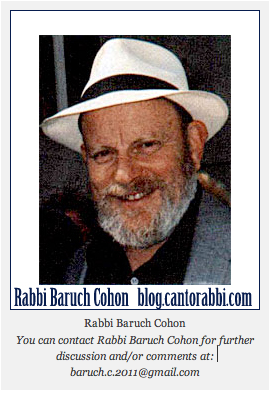
REBELLION – “Korach” Numbers 16-18 – by Rabbi Baruch Cohon

Screen Shot 2013-11-05 at 11.26.08 AM

REBELLION – “Korach” Numbers 16-18 – by Rabbi Baruch Cohon

Of all the challenges Moses faced through his 40-year leadership on the desert journey to the Promised Land, Korach’s rebellion stands out as a singular and spectacular confrontation. A fellow-Levite, Korach considers himself better qualified than Moses and Aaron to be a religious leader. His father was senior to theirs. And the other rebels coming from the tribe of Reuben, Jacob’s firstborn, consider themselves hereditary national leaders. Not to mention that the rebels are among the wealthier ex-slaves.

At a remarkable trial by Divine judgment, Aaron’s offering is accepted and Korach’s is rejected. Not just the offering is rejected, however. The earth breaks apart and down go Korach, his family, his followers and their homes into a Biblical sinkhole.

Certainly a violent verdict on a rebellion conceived in envy and pursued in audacity.

Later generations found this account highly significant. Rabbah bar bar Khana, known as the “Baron Munchausen” of the Talmud, told of an experience in the desert when an Arab guided him to a place where he found a crack in the ground. Bending down to it, he heard the voices of Korach and his followers calling out: “Moses and his Torah are true and we are liars!” Their eternal punishment for their rash action.

Yet, a couple of weeks from now we will read that “the sons of Korach did not die.” Not only did they survive their fathers’ destruction, they had special duties in Solomon’s Temple. As loyal Levites, they sang and composed Psalms, which are credited to them in our daily prayers.

Rebellion did not die with Korach either, that’s definite. But it remained for other misguided Israelites to pick it up. Each generation on its own.

Clearly the necessary element is exactly what Korach missed. Know what you are rebelling against, and why. Sometimes we need to rebel – against greed, injustice, tyranny, corruption – because we have to take action for a better life. Not that we ourselves are better, not that we are so special. Just not to be stepped on. Korach’s sons knew that. Too bad their father didn’t.

Posted in Jewish Blogs | Tagged , , , , , , , , , , | 1 Comment

CHECKING IT OUT – “Sh’lakh l’kho” – Num. 13-15 by Rabbi Baruch Cohon

Screen Shot 2013-11-05 at 11.26.08 AM
CHECKING IT OUT – “Sh’lakh l’kho” – Num. 13-15 by Rabbi Baruch Cohon

You get a call from your friend, your employee, or a member of your family, advising you of an opportunity.  A house for sale in a neighborhood you like. You are interested. So you suggest: check it out.

Depending on how that person goes about checking out the prospective purchase, you may or may not want to make an offer on it. For example, here’s one kind of report:

“The house looks solid enough. Roomy, too. Big yard with fruit trees. In fact, we picked a couple of lemons and an avocado. But we can’t get in to see the inside because the agent demands an accepted offer first. Also it’s been painted recently so the price is very firm. Right down the street we saw some graffiti. Kids strolled by wearing their hats backwards, may be gang infested.”

And here’s another:

“Got talking with the lady next door. Found out the owner is very anxious to sell. Open to any offer. Just modernized the kitchen and redecorated, then got transferred to the east coast. So he has no cash on hand to put down on a home there. Anyone with a large down payment can write their own ticket. Neighborhood Watch is very effective, no major problems.”

Are these two people talking about the same house? Sure they are. Just as the two groups of spies we will read about this week were talking about the same country. The important difference is how they checked it out.

The 12 spies Moses sends out in the Torah portion are princes. Executives. Commissioned officers. They follow accepted procedures — sample the fruit, assess the strength of the fortifications, take note of the appearance of the local population. If they only had video, they could bring back picture and sound to back up their report of 50-foot walls and men of giant size. By a vote of 10 to 2, they convince the people that Canaan cannot be conquered.

In the Haftorah, Joshua sends two spies who are quite different. One is 80-year-old Caleb, the only surviving member of the original checker-outers and one of the dissenting minority (Joshua himself being the other dissenter). The second spy is a youth of 18. One chosen for courage, the other for wisdom. They don’t take notes and they don’t bring samples. They spend the night with Rahab. Her occupation is innkeeper, providing accommodations to travelers. From the Hebrew word “zonah” we gather that she provides other comforts too. Either way, she has ample opportunity to gauge the spirit of the population. She trades her inside information for a guarantee of safety, and the two spies return with a message: Piece of cake. The locals dread them.

Chances are, neither report was 100% accurate. But the contrast is dramatic. The negative report in the Book of Numbers brings on 40 years in the desert. The positive report in the Book of Joshua empowers the people to take over Jericho in a week. Shofar blasts bring down the walls!

How do we go about checking out our opportunities? Do we suffocate them by analyzing the difficulties? And does that make them look insurmountable?

Am I too old to learn how to use a computer? After all, I’m not even a good typist, and computer science is as foreign as Swahili. I don’t have money to spend on software that becomes obsolete in half an hour. Let alone the furniture that goes under all that equipment. I’d better stay in the lead pencil desert for another 40 years.

Do I have the discipline to change my health habits? After all, those exercise machines are really no better than a good walk around the block, are they? Didn’t you hear about the fellow that lost big pounds and built up his muscles – and died anyway? I don’t trust those diets either. Every couple of weeks a new one comes out, and they contradict each other. I’d better stay in the Aspirin and Alka-seltzer desert for another 40 years.

Can I really patch things up with my sister? So much time has gone by. She’ll consider me stupid for trying. Whatever happened between us isn’t even the issue any more. We just have different lives now. 50-foot walls between us. Our antagonism is gigantic. Better stay in the Breygez (angry) desert for another 40 years.

Let’s take another look. Check it out again. Maybe we can turn part of our future around in just a week. Take a message from your friendly “innkeeper:” A computer is just a tool, and a few simple functions of it can make your life easier and more interesting. The first cream puff you forego, the first stationery bike ride you take, can be the first step to feeling better. And as for your sister, maybe you and she can both assume that time wounds all heels. Take the first step. Blow the shofar loud enough and the walls come tumbling down.

##

Posted in Baruch Cohon, Book of Numbers, Jewish Blogs, Moses, Torah Study | Tagged , , , , , , , , , | 1 Comment

A DOUBLE TORAH WEEK – Shavuot & B’haalot’kha – by Rabbi Baruch Cohon

Screen Shot 2013-11-05 at 11.26.08 AM

A DOUBLE TORAH WEEK – Shavuot & B’haalot’kha – by Rabbi Baruch Cohon

This week we will read Numbers chapters 8-12. Among other things this section partly answers a question that came up last week about the men of Levi. Namely, since they served in the Tabernacle from age 30 to 50 and did no military service, what did they do for their first 30 years? Here we will read that their service actually began at 25. So the Midrash explains that they spent 5 years learning, and then assumed their duties at age 30. Other subjects treated next Shabat include the original Menorah, the law concerning those who were unable to keep the Passover in Nisan and had to do so a month later (called “Pesach Sheyni”– the Second Passover), some bitter grumbling about the hardships of their trek through the desert and even a movement to return to Egypt, rules for making the silver trumpets for vital signaling, and Miriam’s punishment for criticizing Moses’ wife. Quite a colorful section.

But first comes the festival of Shavuot – or Sh’vues if you prefer – which starts Tuesday evening. Of the three pilgrim festivals this is the shortest, but like the others it combines religious and agricultural traditions. Called “Yom haBikkurim” – the day of the first fruits – this was the day when our ancestors brought the first yield of the spring harvest to Jerusalem as a sacred offering. Some beautiful descriptions of this custom can be found in our literature. That’s the agricultural memory.

The religious memory is older and stronger. Unlike the other festivals, this holiday does not begin on the 15th of the month but on the 6th. Coming just 50 days after the anniversary of the Exodus which we celebrated on Passover, it marks the day our ancestors gathered at Mount Sinai to receive the Torah. Seven short weeks from slavery to national identity. We can well call the Torah our Constitution.

In the 20th chapter of Exodus we read the story of Moses climbing the mountain and getting instructions on how to prepare the people for this one-time event. We must register the details. The Israelites arrive at Sinai at the beginning of the third month, namely Sivan. A couple of days to set up their camp, then on the 3rd day Moses gets his instructions: 1- he tells the people the conditions, and they agree. 2-they have two more days, the 4th and 5th of Sivan, to prepare to hear the voice of G-d; these preparations include washing their clothes, and separating the sexes. 3-Then comes the event itself. On the morning of the 6th – this week it’s on Wednesday—thunder and lightning! Smoke envelops the mountain. The sound of the Shofar is very powerful. “Moses speaks, and G-d answers him out loud.”

So we will stand and re-read the Ten Commandments. Their name in Hebrew is not Ten Commandments, or “aseres ha-mitzvos”, by the way, it is “aseres ha-dibros” – literally the Ten Statements. Yes, the same ten statements of right and wrong that still speak to us and our neighbors in public buildings from the Supreme Court to local city halls, even if some people now consider them politically incorrect. When they were first spoken, we learn that our ancestors heard the first two directly from the Divine Voice, and then asked Moses to tell them the rest, out of fear of contact with a supernatural force they could not see.

The words remain sacred. The location does not. Sinai is just a mountain, not even a very high one, and was never made into a shrine. A telling line in this reading comes in the 21st verse of chapter 20: “Every place where I cause My name to be mentioned, I will come to you and bless you.” Read this Torah wherever you are, in the synagogue or at home, in a bus or on a beach. Blessing is there.

Posted in Baruch Cohon, Book of Numbers, Jewish Blogs, Moses, Shavuot, Torah Study | Tagged , , , , , , , , | Comments Off on A DOUBLE TORAH WEEK – Shavuot & B’haalot’kha – by Rabbi Baruch Cohon

DIFFERENT KINDS OF SERVICE – “Naso” – Num.4:21-7, by Rabbi Baruch Cohon

Screen Shot 2013-11-05 at 11.26.08 AM

DIFFERENT KINDS OF SERVICE – “Naso” – Num.4:21-7, by Rabbi Baruch Cohon

Last week’s census counted 11 tribes of Israel, numbering men age 20 and over, “all who go out to the army.” This week we find Moses counting the one remaining tribe, Levi. Here the rules are different. Each male one month old and above was already counted, and none of them go to military service at any age. What they do is religious service: carrying the Tabernacle’s posts and curtains, the altar, the ark and all the rest of the furnishings. They also are the ones who will assist the Cohanim – Aaron’s priestly family – in conducting the sacrificial ritual. And here they get counted from the age when they enter their service at 30 years old, and they will serve until the age of 50, unlike the other tribesmen who go to the army at 20 and have no upper age limit on their service.

Different rules like these bring up some logical questions. What did the Levite men do for the first 30 years of their lives? And did they “retire” to some resort at age 50? Understandably, Tabernacle service – and Temple service later – required the strongest, most alert and most productive years of their lives. So we may well assume that some serious training had to prepare them for that service. In the desert, where moving the camp called for some heavy lifting, did they spend a good part of their youth on body building? Did they go in for musical training to qualify for the Levitic choir and orchestra? And generations later, once Solomon’s Temple became their home, did they go in for Torah scholarship so they could guide their people on proper ritual conduct?

Surprisingly, the Torah does not answer these questions. Commentaries ignore them too. What the commentators do call to our attention is the specifics of the work of the three Levitic families – Gershon, Kehat and Merari. They got basically equal work to do. In fact, we learn important lessons from their tasks. For example, carrying the Torah, in the Ark of the Covenant, is not a job reserved for the eldest, Gershon, but for the more humble Kehat. No special privilege here. The lesson is clear: the Torah does not belong to any individual; it is the heritage of all Israel.

Presumably, then, whatever the men of Levi did to prepare for their sacred service, whatever training occupied their first 30 years, was the same for all of them. Most likely, the youngsters followed their fathers and learned whatever skills their fathers could teach them. Out of all their years of growth and training, the essential lesson they could learn was the unique importance of their work. For 20 years of their lives, they would enable all Israel to “walk in the light of G-d.”

Remembering that the Israelite camp moved through the desert for – not 20 but – 40 years, we can figure that the men of Levi had ample time to perfect their service. And finally to cross the Jordan into the Promised Land, carrying the sacred symbols of the faith. Their strength, their skill, their dedication set the pace to inspire the descendants of slaves to become a nation.

Today those Jews whose Hebrew names include the word “ha-Levi” don’t have to carry any synagogues. But if their firstborn is a son, he does not require a “Pidyon haBen” redemption ceremony, because the ancient tribe of Levi was symbolically given to G-d to replace the firstborn of all the other tribes, after the Tenth Plague killed the firstborn of Egypt and spared Israel. And when the Torah is read in services, the Levi is entitled to the second “Aliyah,” to pronounce the blessing. And he does not have to wait until he’s 30 years old either. 13 will do just fine.

So we don’t have a full description of the young Levites’ preparation years. But their descendants, and all of us, can savor their history of service.

Posted in Baruch Cohon, Book of Numbers, Counting, Jewish, Jewish Blogs, Levi, Torah Study | Tagged , , , , , , , , , , , | 1 Comment

COUNTING IN THE DESERT – Bamidbor – Numbers 1-4:20, by Rabbi Baruch Cohon

Screen Shot 2013-11-05 at 11.26.08 AM
COUNTING IN THE DESERT – Bamidbor – Numbers 1-4:20, by Rabbi Baruch Cohon

This week’s reading gives its name to the entire book which it opens. But the English name seems to bear no relationship to the Hebrew name of the same book. “Numbers” is not a translation of “Bamidbor,” which means “In the desert.” Actually, the Hebrew name sets the scene for the whole history described in this book, which follows the ancient Hebrew tribes through the desert, in their slow and perilous progress toward the Promised Land. The English name is appropriate to this week’s reading, however, since here we see the completion of the census Moses conducted just a couple of months earlier when the Tabernacle – the mishkan – was built. Then, every male Israelite of military age had to bring a contribution of half a shekel toward the construction of the first Jewish house of worship. By counting the coins, the people’s leaders knew the total number of potential fighters: 603,550.

Now Moses has to fill in the details. How many in each tribe, who will lead each tribe, where will each tribe camp, etc. The total here is identical with the total in the half-shekel count in Exodus 38:26. But the purpose of this census is different. Besides joining in a religious cause, the men of Israel are now accepting responsibility for the safety of their camp, and acknowledging the authority of their tribal chiefs. In effect, this census – this re-count if you will – marks another step in developing both civil and military structure. Ancient Israel is becoming a nation. Not without pain, to be sure. Further along in this book of Bamidbor we will see their trials, tragedies, triumphs – all the milestones and missteps on the way to nationhood – even before crossing the Jordan.

Each tribe is numbered here, from the largest, Judah at 74,600, to the smallest, Menasheh at 32,200. Only the tribe of Levi is not numbered since the men of Levi had military exemption; they did not serve in the army but were devoted to Tabernacle service. In fact they camped closest to the Tabernacle on three sides. And the families of Moses and Aaron camped on the east side. Rashi’s commentary points out that their neighbors on the east side of the camp were the tribes of Judah, Issachar and Zebulun, and because of that proximity those tribes produced great Torah scholars! Thus we learn about the great value of a good neighbor. So observes the Lubavitcher Rebbe. So may it always be.

Posted in Aaron, Bamidbar, Baruch Cohon, Book of Numbers, Census, Counting, Jewish, Jewish Blogs, Moses, Torah Study | Tagged , , , , , , , , , , , | 1 Comment